
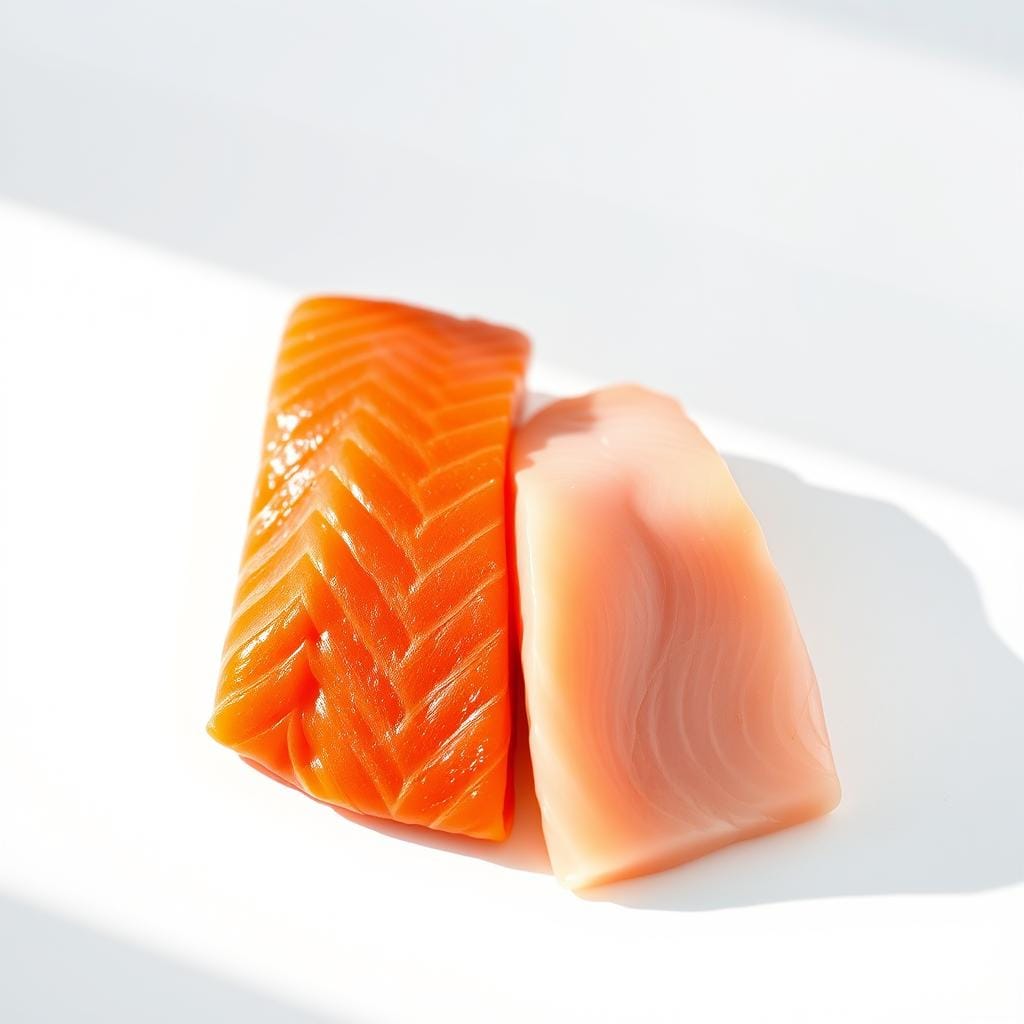
Standing in the grocery aisle, you might wonder about canned salmon. Red vs Pink Canned Salmon for Loaf Which one is key for a great salmon loaf?
Making a perfect salmon loaf is more than just opening a can. The choice between red and pink canned salmon affects texture and nutrition. Each type has its own special qualities that can make or break your dish.
Looking at salmon colors is more than just aesthetics. Wild-caught red (sockeye) salmon has a richer taste and firmer texture. Pink salmon, on the other hand, is milder and softer, perfect for various recipes.
For those watching their budget, there’s a price difference. Red salmon costs between $4.99 and $6.99 per pound. Pink salmon is cheaper, ranging from $2.99 to $4.99. Your wallet and taste buds will appreciate these differences.
Whether you’re an experienced chef or a home cooking newbie, knowing the differences between red and pink canned salmon can elevate your loaf. Let’s explore the world of canned salmon and find the secrets to your ideal seafood dish.
Table of Contents
Understanding Canned Salmon Varieties
Diving into the world of canned salmon reveals a fascinating landscape of flavors, textures, and nutritional profiles. Your salmon selection can dramatically impact the taste and quality of your favorite recipes.
Canned salmon types offer unique characteristics that cater to different culinary preferences and nutritional needs. The primary distinction lies in wild-caught vs farmed salmon, each bringing distinct qualities to your kitchen.
Wild-Caught vs Farm-Raised Options
Wild-caught salmon, like sockeye, is the premium choice for discerning cooks. These fish live in natural environments, resulting in:
- Bolder, more robust flavor profile
- Higher omega-3 fatty acid content
- More natural diet and habitat
Farm-raised salmon, on the other hand, offers a milder taste and more consistent availability. These salmon are cultivated in controlled environments, providing:
- Uniform texture
- Lower price point
- Year-round accessibility
Seasonal Availability Impact
Salmon availability fluctuates with natural migration and fishing seasons. Wild salmon typically peaks between May and September, influencing both pricing and quality.
| Salmon Type | Peak Season | Average Price |
|---|---|---|
| Wild Sockeye | June-August | $5-$6 per can |
| Pink Salmon | July-September | $3-$4 per can |
Quality Indicators to Look For
When selecting canned salmon, focus on these key quality markers:
- Check for wild-caught labels
- Verify sustainable fishing practices
- Examine mercury levels
- Review omega-3 content
“Not all canned salmon are created equal. Your choice matters for taste, nutrition, and environmental impact.” – Seafood Nutrition Experts
The Rich Heritage of Red Salmon
Red salmon, also known as sockeye salmon, is a nutritional superstar in the seafood world. It’s known for its unique traits and impressive nutrition facts.
Found in Alaska’s and the Pacific Northwest’s clean waters, red salmon has a nutritional profile that stands out. Its deep red color shows its high omega-3 content and great taste. This has won over chefs and health fans.
“Red salmon is nature’s nutrient powerhouse, delivering exceptional omega-3 in salmon with every bite.” – Seafood Nutrition Expert
Nutritional Highlights
- Higher omega-3 fatty acid content compared to pink salmon
- Rich in high-quality protein
- Excellent source of vitamin D
- Low mercury levels compared to other fish
Red salmon is a nutritional leader among salmon types. A 3.5-ounce serving packs 1.7 grams of omega-3 fatty acids. This is almost double what pink salmon offers.
| Nutrient | Red Salmon | Pink Salmon |
|---|---|---|
| Omega-3 Fatty Acids | 1.7 grams | 0.8 grams |
| Protein | 22 grams | 20 grams |
Choosing red salmon is a smart move for those looking for nutrient-rich seafood. It offers great taste and health benefits.
Nutritional Comparison Between Varieties
It’s important to know the nutritional value of salmon for your diet. Salmon is packed with nutrients that are great for your health. Whether you’re making salmon cakes or just want a healthy meal, knowing the facts can help.
Red and pink salmon have small but important differences. Both are very healthy, but they have different nutrients.
Omega-3 Fatty Acid Content
Omega-3 fatty acids are good for your heart and brain. Wild salmon usually has more of these important nutrients:
- Red salmon: Higher omega-3 concentration
- Pink salmon: Moderate omega-3 levels
Protein and Vitamin Levels
| Nutrient | Red Salmon | Pink Salmon |
|---|---|---|
| Protein per 3.5 oz | 22g | 20g |
| Vitamin D | High | Moderate |
| Vitamin B12 | Excellent | Good |
Caloric Differences
The calories in salmon can differ based on the type. A 3-4 ounce serving has about 200 calories. Red salmon has a bit more calories because it has more fat than pink salmon.
“Choosing between red and pink salmon depends on your specific nutritional goals and taste preferences.”
Pro tip: Wild-caught salmon generally offers a more nutrient-dense profile compared to farm-raised varieties.
Texture and Moisture Considerations
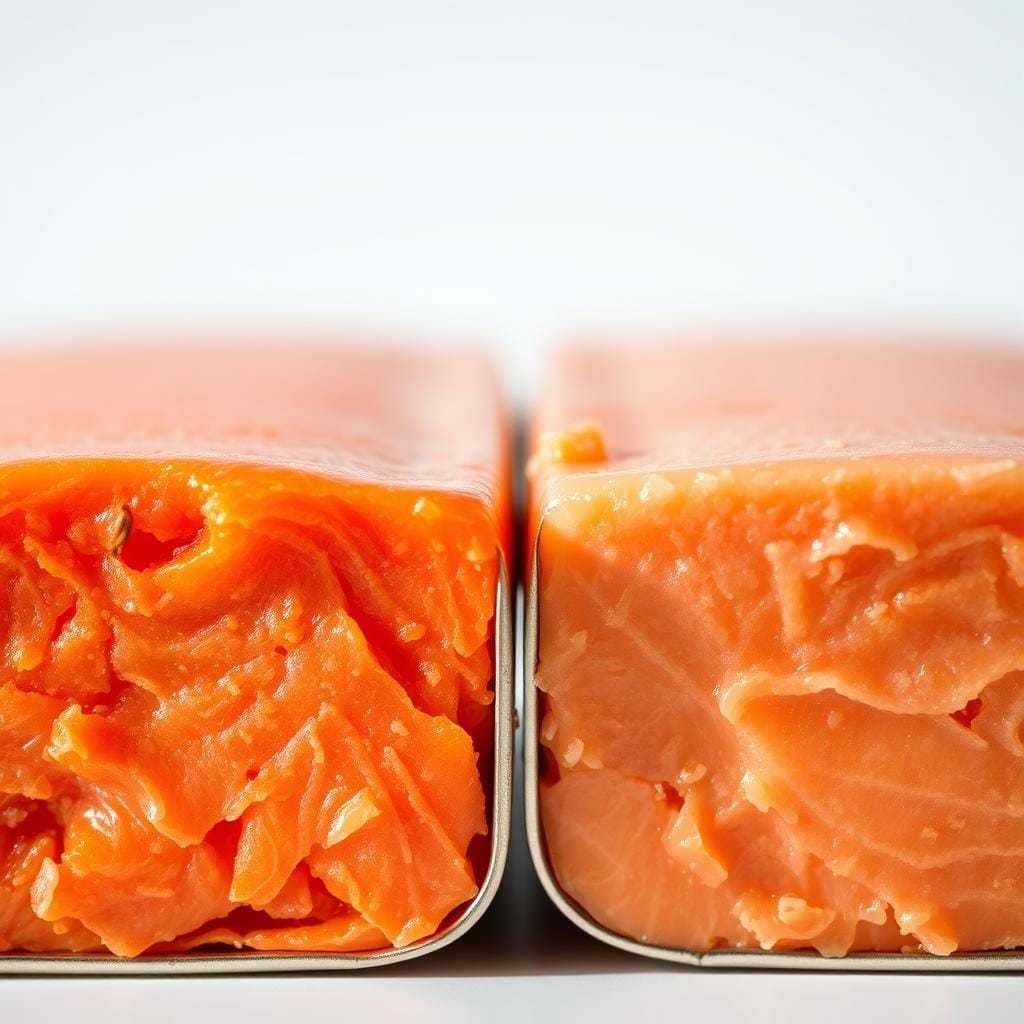
When making salmon loaf recipes, knowing the texture of canned fish is key. Red and pink salmon have different textures that affect your dish.
Red salmon has a dense, firm texture. This makes your loaf keep its shape well. Chefs like it because it makes a loaf that’s easy to slice and holds together.
- Red salmon: Firm and dense texture
- Pink salmon: Softer, more delicate consistency
- Texture impacts overall loaf stability
Pink salmon has a softer texture that needs gentle handling. It makes a lighter, tender loaf. But, you might need to add breadcrumbs or eggs to keep it together.
“The secret to a perfect salmon loaf lies in understanding your fish’s unique texture.” – Culinary Expert
| Salmon Type | Texture Characteristics | Loaf Performance |
|---|---|---|
| Red Salmon | Dense and firm | Excellent shape retention |
| Pink Salmon | Soft and delicate | Requires additional binding |
Pro tip for home cooks: If you’re using softer fish, try adding additional binding agents. This will help make a strong and tasty salmon loaf that stays together.
Red vs Pink Canned Salmon for Loaf
Choosing the right canned salmon is key for a great salmon loaf. Red and pink salmon have different qualities that affect your dish.
When making salmon loaf, knowing the red and pink salmon differences is important. It helps get the right texture and taste.
Binding Properties
Red salmon is better at binding than pink salmon. It makes a loaf that stays together well when cooked. Pink salmon is softer and might need extra help to stick together.
Structure Stability
- Red salmon provides better structural integrity
- Maintains shape more effectively when sliced
- Less likely to crumble during preparation
Cooking Behavior
Red and pink salmon cook differently. Red salmon keeps moisture and flavor better when baked into a loaf.
“For the best salmon loaf, choose wild-caught red salmon. The difference in taste and texture is remarkable.” – Culinary Expert
| Characteristic | Red Salmon | Pink Salmon |
|---|---|---|
| Texture | Firm | Softer |
| Binding Strength | High | Moderate |
| Moisture Retention | Excellent | Good |
| Flavor Intensity | Rich | Mild |
When making your salmon loaf, think about red and pink salmon’s unique qualities. Red salmon gives a better taste and texture for those who care about quality.
Price Points and Value Analysis
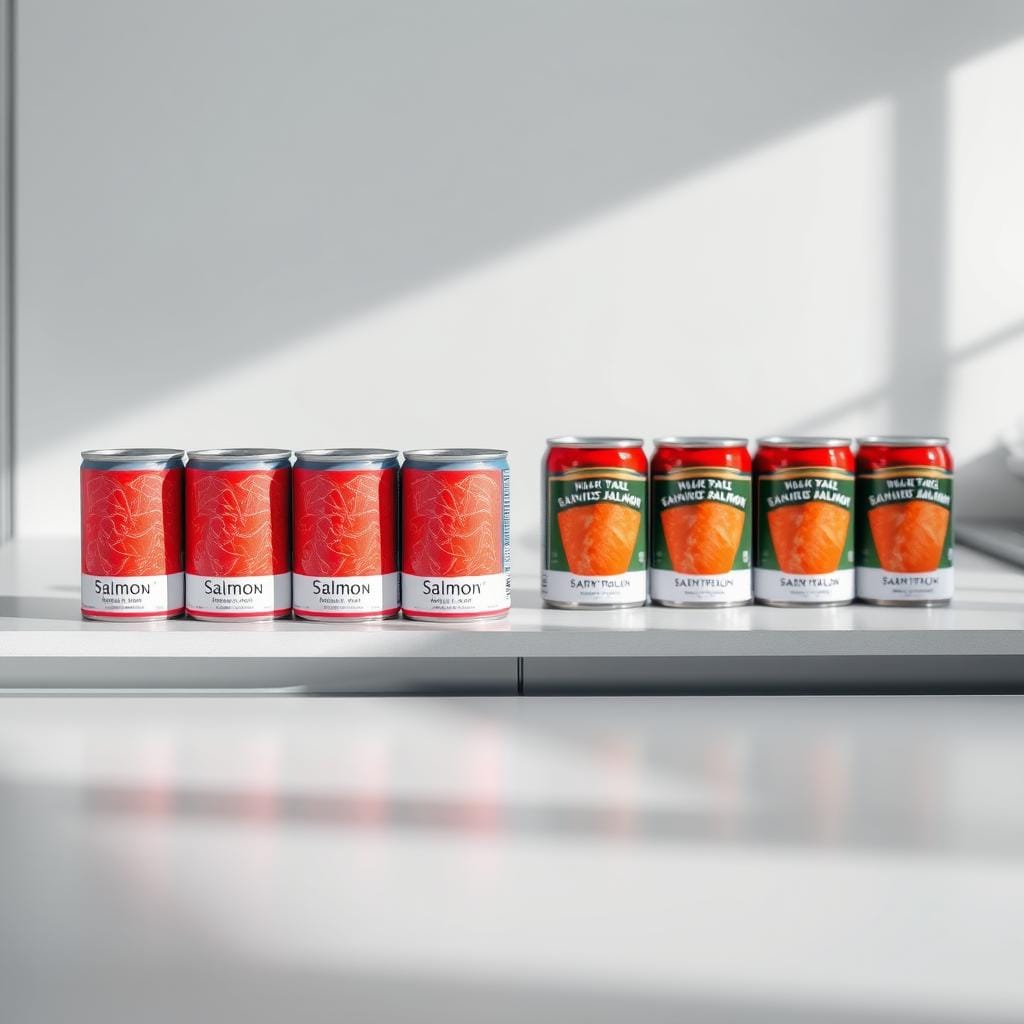
Looking into sustainable seafood, it’s key to know the prices of different canned fish. Pink salmon is a cheap, protein-rich choice that’s good for your health and wallet.
What you buy can affect your money and health. Here are the main price points for canned salmon:
- Pink salmon is 30-40% cheaper than red salmon
- It’s still packed with nutrients, even at a lower price
- Great for planning meals on a budget
Even though it’s affordable, pink canned salmon doesn’t skimp on quality. It offers:
- High omega-3 fatty acids
- A lean protein source
- Important vitamins and minerals
“Smart consumers know that price doesn’t always dictate nutritional value” – Seafood Nutrition Council
When picking canned fish, think about the value you get. Red salmon might seem more expensive, but pink salmon is a budget-friendly option. It keeps the nutritional benefits high.
More people are looking for affordable, sustainable seafood. Pink salmon is a great choice that’s both cheap and nutritious.
Flavor Profiles and Taste Differences
Exploring canned salmon types reveals interesting flavor differences. These differences can change how you enjoy your food. The color of salmon is more than just looks; it’s about the taste it brings to your dishes.
Intensity of Flavors
Red salmon has a strong, rich taste that stands out. Sockeye salmon, which is often red, has a more intense flavor than pink salmon. This makes it perfect for dishes that need a bold seafood taste.
Best Seasoning Combinations
Choosing the right seasonings can make your canned salmon taste amazing:
- Red Salmon Pairings:
- Dill
- Garlic
- Cayenne pepper
- Pink Salmon Pairings:
- Lemon
- Parsley
- Tarragon
Recipe Adaptability
Choosing between red and pink canned salmon changes how your dish turns out. Pink salmon’s mild taste is great for light dishes. Red salmon, with its stronger flavor, is better for hearty recipes.
“The secret to great salmon dishes lies in understanding each variety’s unique flavor profile.” – Culinary Expert
Knowing these flavor differences helps you pick the right canned salmon for your dish. This ensures your food always tastes great.
Storage and Shelf Life
Storing canned fish properly is key to keeping it fresh. For canned salmon, knowing how to store it helps keep its nutrients and taste good.
Unopened canned salmon can last 2 to 5 years if stored right. Focus on three main things:
- Keep cans in a cool, dry place
- Avoid direct sunlight
- Maintain consistent temperature
Once you open it, storage changes. Refrigeration is key for safety and quality. Here’s a quick guide for after opening:
| Storage Method | Duration | Recommended Conditions |
|---|---|---|
| Refrigerated (Opened) | 3-4 days | Airtight container |
| Freezing (Salmon Loaf) | Up to 3 months | Wrapped securely |
“Proper storage extends the life of your canned salmon and preserves its nutritional integrity.” – Seafood Preservation Expert
Pro tip: Always check for any signs of damage or bulging in cans before storage. When in doubt, discard the can to ensure food safety.
Sustainability and Environmental Impact
Choosing sustainable seafood is key. It’s important to know how salmon production affects the environment. Wild vs farmed salmon has big differences in how they impact our oceans and our choices.
The fishing world is facing big problems. More than 90% of fish stocks are over-fished or gone. We need to find ways to fish that save our oceans.
Fishing Methods and Their Ecological Footprint
How we catch salmon matters a lot. Wild-caught salmon is often cleaner than farmed. Here’s why:
- Wild salmon fishing is more careful
- Smaller fish have less toxins
- Good fishing helps keep oceans diverse
Carbon Footprint Analysis
Salmon making is a big carbon emitter. From catching to eating, it all adds up.
| Salmon Type | Carbon Emissions | Sustainability Rating |
|---|---|---|
| Wild Alaskan Salmon | Lower | High |
| Farmed Salmon | Higher | Moderate |
Conservation Efforts
There are efforts to save salmon and their homes. Alaskan fisheries are doing well, with salmon sales up 30% in 2020. This shows they’re managing well.
“Sustainable fishing isn’t just about today’s catch, but preserving marine ecosystems for future generations.”
Your choice of seafood matters a lot. By picking responsibly caught canned salmon, you help the oceans stay healthy.
Conclusion
Exploring red vs pink canned salmon for loaf recipes shows each has its own benefits. Red salmon has a richer taste and more omega-3s. Pink salmon is cheaper but still packed with nutrients. Your choice depends on what you like, your cooking goals, and your health needs.
When it comes to nutrition, both red and pink salmon are great. They have lots of protein and omega-3s. Pink salmon has fewer calories and fats, which is good for those watching their diet.
Think about the environment too. Wild-caught red salmon from Alaska is better for the planet. Pink salmon is more accessible. Look at fishing methods, habitat care, and marine health when choosing.
Try both red and pink canned salmon to find your favorite. Each type adds something special to your recipe. This way, you’ll get tasty results that meet your taste and health goals. Enjoy making delicious meals for your loved ones with canned salmon.
FAQ
What’s the main difference between red and pink canned salmon?
Is red salmon always better for making a salmon loaf?
How do the nutritional values differ between red and pink canned salmon?
Can I substitute pink salmon for red salmon in a recipe?
What should I look for when buying canned salmon for a loaf?
Is there a significant price difference between red and pink canned salmon?
How long can I store opened canned salmon?
Which type of canned salmon is more environmentally sustainable?
Does the color of the salmon affect its taste in a salmon loaf?
Are there any health concerns I should know about when consuming canned salmon?
Source Links
- Red vs Pink Canned Salmon for Loaf: Making the Right Choice – https://perkyrecipes.com/red-vs-pink-canned-salmon-for-loaf/
- 11 Facts You Should Know About Canned Salmon – https://www.yahoo.com/lifestyle/11-facts-know-canned-salmon-122520280.html
- Red vs Pink Canned Salmon for Loaf: Top 3 Tips – https://www.meatrecipes.net/red-vs-pink-canned-salmon-for-loaf/
- Easy 5-Minute Salmon Salad – https://therealfooddietitians.com/5-minute-salmon-salad/
- 12 Simple Canned Salmon Recipes for Quick Meals – https://www.tasteofhome.com/collection/canned-salmon-recipes/?srsltid=AfmBOootKvhndNvbFEcxs9NyuyF2JpRljCEYwdopapZCDUQFclIXvifT
- 11 Facts You Should Know About Canned Salmon – The Daily Meal – https://www.thedailymeal.com/1559525/canned-salmon-facts-you-should-know/